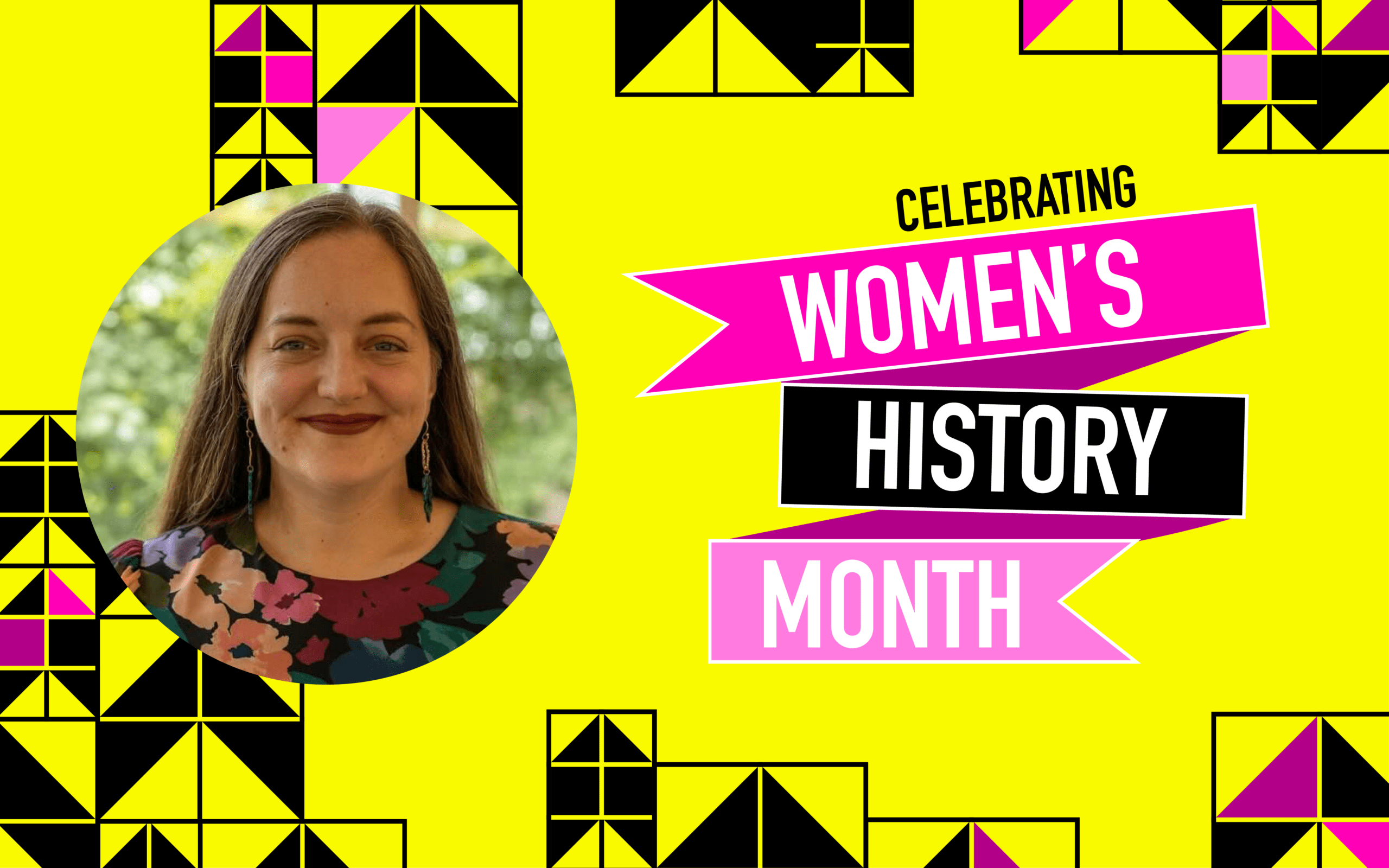
This is part of a series of writings from Noble staff that celebrate heritage and history. This piece was written to celebrate Women’s History Month in 2026.
By Casey Reit | she/her
Alumni Success Coach, Muchin College Prep & Chicago Bulls College Prep
Grief and art exist as forces of care and complexity in my life. In the past year, I lost both of my grandmothers, my two surviving grandparents I knew and loved: Lorraine (Nana) and Veronica (Grandma). As we begin Women’s History Month, I have been thinking deeply about their powerful and complicated legacies. Proud women of distinct faiths (Judaism and Catholicism), Lorraine and Veronica embodied independence, devotion, courage, hard work, and matriarchal strength in their ninety-five years on this Earth. Avid readers and college graduates, they dedicated nearly half their lives in service of educating public high school students.
Lorraine, my paternal grandmother and mother of two, taught American History in New York, and Veronica, my maternal grandmother, worked as a guidance counselor- notably while raising six children as a young widow- in Florida, where I was born and raised. They poured into me and influenced my love of art, taking me to local theatre shows and art exhibits throughout my adolescence so I could “broaden my culture.” Exposure to art empowered my critical thinking, deepened my curiosity, and ignited my wanderlust. Loving art has steadied me through struggles and shaped important decisions in my life. I chose Chicago as my new home in 2014 for social work graduate school largely because I loved this city’s creative opportunities, and that set the stage for my journey at Noble that began in 2016.
Lorraine and Veronica endured immense hardships with grace and tenacity, and I am grateful that their loving sacrifices built a more sustainable future for me. At the same time, they carried unexamined race and class privileges as white women that hindered their perceptions of diversity, equity, and inclusion. I was unable to safely express my inner world with them, including my queer identity, my mental health and body acceptance journeys, and my antiracist political beliefs, because their biases implicitly reinforced that wellness, success, and justice are largely “personal responsibility instead of something that requires collective accountability” (Carolyn Lazard, Black Futures). I accept these tensions in their stories as empathy lessons. Holding space for people and their full histories, which are often dissonant and imperfect, is an essential foundation for building a future that encourages transparency, connection, and healing.
The need for healing is vast and urgent. Young people are deeply vulnerable amidst economic and political instability. As an Alumni Success Coach at Noble, I am worried about the rising mental health trends and coping strategies I am observing. Teens are scrolling more hours than they’re sleeping; both, I’m often told, are their “favorite hobbies.” They’re expressing overwhelm and anxiety about the future. They’re struggling to sustain attention for reading, building community, and meaningfully exploring their interests and needs: vital skills connected to college and career success. I think of artist Yetunde Olagbaju, who outlines in her community contract “I WILL PROTECT BLACK PEOPLE” that “everyday the safety of Black people is threatened, physically, mentally, and spiritually.” The threats posed by a technologically-driven and addictive attention economy and an overemphasis on productivity without space for resting and reclaiming curiosity require creative solutions.
In 2025, I created an after-school enrichment program at Muchin College Prep called “Art Herstory. ” My goal is to spotlight diverse and influential women in the arts, like Faith Ringgold, Elizabeth Catlett, and Zanele Muholi, whose revolutionary contributions have been overlooked. Gender and racial discrimination run deep in the art world. Women, especially women from low-income and marginalized backgrounds, have historically been denied opportunities for education and representation, and those disparities persist. Across major US art museums, over 75% of artists exhibited are white and male, while less than 1% are women of color. Women receive significantly fewer awards, gallery sponsors, leadership roles, and sales despite earning more art degrees than men. Gender bias also shapes how people perceive art, with studies showing that art assumed to be made by women is rated as less compelling and worth less money than art by men.
I also wanted to make space for scholars to experience women’s artwork in person through curated field trips. Chicago’s renowned art museums- including the Art Institute, the Museum of Contemporary Art, the Museum of Mexican Art, spaces I have visited with my Art Herstorians- have free admission for students and educators year-round and are accessible by public transportation. Students can also access affordable theatre and musical experiences with a library card and a Teen Art Pass. Yet many of our young people have never set foot in these spaces. Moreover, many Chicago museums and performing art spaces are in a vulnerable position: they still have fewer attendees and less funding compared to pre-pandemic years, and now they are facing major federal grant funding cuts. Just like small businesses, continued support for art is what keeps doors open and minds engaged.
Art is not a luxury that should only be enjoyed by society’s most privileged. It is essential to a sustainable future.
Del dolor a la Herstory: por qué el arte es importante
Por Casey Reit | she/her/ella
Entrenador de éxito para exalumnos, Muchin College Prep & Chicago Bulls College Prep
El dolor y el arte son fuerzas de cuidado y complejidad en mi vida. El año pasado perdí a mis dos abuelas, las dos que me quedaban y a quienes conocía y quería: Lorraine (Nana) y Verónica (Abuela). Al comenzar el Mes de la Historia de la Mujer, he estado reflexionando profundamente sobre su poderoso y complejo legado. Lorraine y Veronica, mujeres orgullosas de distintas religiones (judaísmo y catolicismo), encarnaron la independencia, la devoción, el coraje, el trabajo duro y la fuerza matriarcal durante sus noventa y cinco años en esta Tierra. Ávidas lectoras y graduadas universitarias, dedicaron casi la mitad de sus vidas a la educación de estudiantes de secundaria pública.
Lorraine, mi abuela paterna y madre de dos hijos, enseñó Historia de Estados Unidos en Nueva York, y Verónica, mi abuela materna, trabajó como consejera escolar —mientras criaba a seis hijos como viuda joven— en Florida, donde nací y crecí. Me inculcaron y influyeron en mi amor por el arte, llevándome a espectáculos teatrales locales y exposiciones de arte durante mi adolescencia para que pudiera «ampliar mi cultura». El contacto con el arte potenció mi pensamiento crítico, profundizó mi curiosidad y despertó mi pasión por los viajes. El amor por el arte me ha ayudado a superar las dificultades y ha marcado decisiones importantes en mi vida. En 2014 elegí Chicago como mi nuevo hogar para cursar un posgrado en trabajo social, en gran parte porque me encantaban las oportunidades creativas que ofrecía esta ciudad, y eso sentó las bases para mi trayectoria en Noble, que comenzó en 2016.
Lorraine y Verónica soportaron inmensas dificultades con elegancia y tenacidad, y les estoy agradecida por sus amorosos sacrificios, que me permitieron construir un futuro más sostenible. Al mismo tiempo, como mujeres blancas, disfrutaban de privilegios raciales y de clase que no se cuestionaban y que obstaculizaban su percepción de la diversidad, la equidad y la inclusión. No podía expresar con seguridad mi mundo interior con ellas, incluyendo mi identidad queer, mis viajes de salud mental y aceptación corporal, y mis creencias políticas antirracistas, porque sus prejuicios reforzaban implícitamente que el bienestar, el éxito y la justicia son en gran medida «responsabilidad personal en lugar de algo que requiere responsabilidad colectiva» (Carolyn Lazard, Black Futures). Acepto estas tensiones en sus historias como lecciones de empatía. Dar espacio a las personas y a sus historias completas, que a menudo son disonantes e imperfectas, es una base esencial para construir un futuro que fomente la transparencia, la conexión y la sanación.
La necesidad de sanación es enorme y urgente. Los jóvenes son profundamente vulnerables en medio de la inestabilidad económica y política. Como coach de éxito para exalumnos en Noble, me preocupan las tendencias crecientes en materia de salud mental y las estrategias de afrontamiento que observo. Los adolescentes pasan más horas navegando por Internet que durmiendo; a menudo me dicen que ambas son sus «pasatiempos favoritos». Expresan agobio y ansiedad por el futuro. Les cuesta mantener la atención para leer, crear comunidad y explorar de forma significativa sus intereses y necesidades: habilidades vitales relacionadas con el éxito universitario y profesional. Pienso en la artista Yetunde Olagbaju, quien en su contrato comunitario «PROTEGERÉ A LAS PERSONAS NEGRAS» señala que «cada día la seguridad de las personas negras se ve amenazada, física, mental y espiritualmente». Las amenazas que plantean una economía de la atención impulsada por la tecnología y adictiva, y un énfasis excesivo en la productividad sin espacio para el descanso y la recuperación de la curiosidad, requieren soluciones creativas.
En 2025, creé un programa de enriquecimiento extraescolar en Muchin College Prep llamado «Art Herstory». Mi objetivo es destacar a mujeres diversas e influyentes en las artes, como Faith Ringgold, Elizabeth Catlett y Zanele Muholi, cuyas contribuciones revolucionarias han sido ignoradas. La discriminación de género y racial está muy arraigada en el mundo del arte.
A las mujeres, especialmente a las de bajos ingresos y procedentes de entornos marginados, se les ha negado históricamente la oportunidad de acceder a la educación y la representación, y esas disparidades persisten. En los principales museos de arte de Estados Unidos, más del 75 % de los artistas expuestos son hombres blancos, mientras que menos del 1 % son mujeres de color. Las mujeres reciben significativamente menos premios, patrocinadores de galerías, puestos de liderazgo y ventas, a pesar de obtener más títulos en arte que los hombres. Los prejuicios de género también influyen en la forma en que la gente percibe el arte, y los estudios demuestran que el arte que se supone que han creado mujeres se considera menos atractivo y vale menos dinero que el arte creado por hombres.
También quería crear un espacio para que los estudiantes pudieran experimentar el arte de las mujeres en persona a través de excursiones organizadas. Los famosos museos de arte de Chicago, como el Instituto de Arte, el Museo de Arte Contemporáneo y el Museo de Arte Mexicano, espacios que he visitado con mis Art Herstorians, tienen entrada gratuita para estudiantes y educadores durante todo el año y son accesibles en transporte público. Los estudiantes también pueden acceder a experiencias teatrales y musicales asequibles con una tarjeta de biblioteca y un Teen Art Pass. Sin embargo, muchos de nuestros jóvenes nunca han pisado estos espacios. Además, muchos museos y espacios de artes escénicas de Chicago se encuentran en una situación vulnerable: siguen teniendo menos asistentes y menos financiación en comparación con los años anteriores a la pandemia, y ahora se enfrentan a importantes recortes en las subvenciones federales. Al igual que las pequeñas empresas, el apoyo continuo al arte es lo que mantiene las puertas abiertas y las mentes comprometidas.
El arte no es un lujo que solo deben disfrutar los más privilegiados de la sociedad. Es esencial para un futuro sostenible.
从悲伤到女性历史:
艺术为何重要
By Casey Reit | she/her
校友成功导师, Muchin College Prep & Chicago Bulls College Prep
悲伤与艺术在我生命中交织成关怀与复杂的力量。过去一年里,
我的外祖母洛林在纽约教授美国历史,育有两子;
洛兰和维罗妮卡以优雅与坚韧承受了巨大艰辛,
治愈的需求既广阔又迫切。经济政治动荡中,
2025年,我在穆钦大学预科学校创立了名为“艺术女性史”
我还希望通过策划实地考察,
艺术绝非仅供社会特权阶层享用的奢侈品,